
Travels across Russia
The real country isn't in the news bulletins — it's right here.
What haven't we seen out there?
According to VTsIOM polls, 95% of Russians dream of travelling somewhere, but only 36% plan to spend their holiday in their home country. "What's there to see here, at home?" they say. In fact, Russia is a whole universe — with the gentle sea of the south, the dense forests of the Sayans and the harsh ice of the Putorana Plateau. And you can see all this beauty without millions in the bank, a foreign passport or many-hour flights. Take Vera Bashmakova, for example — a brave young mother who scooped up her three kids, sat them in her Lada and drove 20 thousand kilometres across her home country. We've picked out and described a few interesting places worthy of your holiday.
- Time zones 11
- UNESCO natural heritage sites 12
- UNESCO cultural heritage sites 16
- Nature reserves 105
- Airports 241
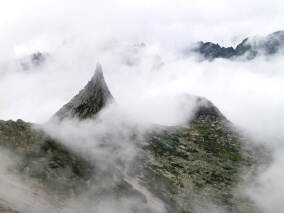
Curonian Spit
URL
park-kosa.ru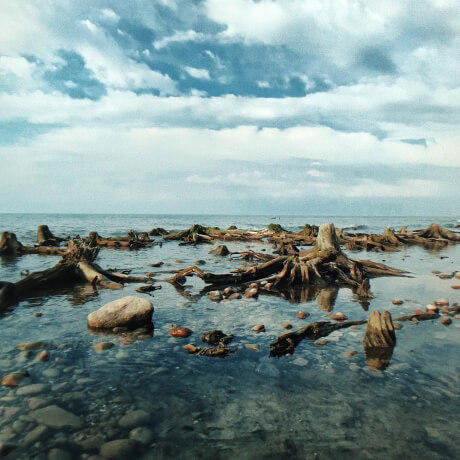
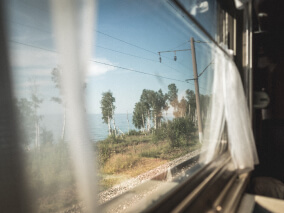
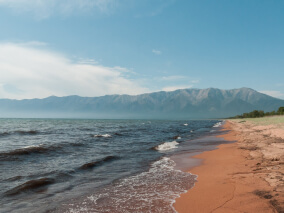
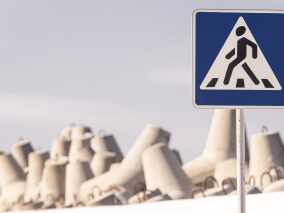
Here, amid forests and sand dunes, you can see two watery horizons — the calm Curonian Lagoon on one side and the wave-rippled Baltic Sea on the other. A unique natural area on the edge of the Russian exclave.
The Kaliningrad Region doesn't end there. For the traveller and explorer, right next door are the westernmost point of Russia, the Baltic Spit, and the German heritage of a scattering of small seaside towns. The atmosphere of these places rules out any fuss, immersing you in the calm of nature and the scent of the steely, cool sea.
Kola Peninsula
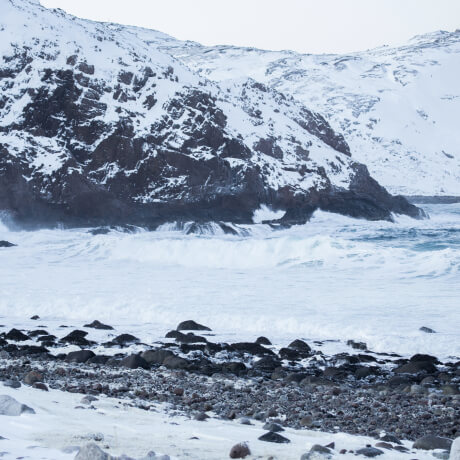
Almost the entire peninsula lies beyond the Arctic Circle. Sami tundra, with taiga to the south of it and the Arctic Ocean — masquerading as the Barents Sea — to the north.
Maybe you've watched Zvyagintsev and even heard the story of the Arctic festival in Teriberka. Maybe the word "Khibiny" hasn't stayed buried under the snow of school geography lessons. Maybe you were never curious about the superdeep borehole piercing the Earth's crust, and apatite has long filled you with apathy. But your dream of seeing the northern lights begins to come true with a ticket to Murmansk.
Altai
URL
YouTube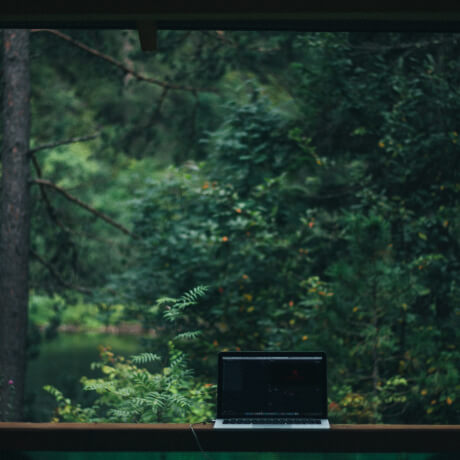
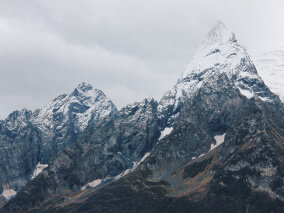
Altai is one of the most beautiful places in Russia. First of all because of the mountains: if you drive along the ridge, you'll see slopes strewn with pines, mountain rivers and lakes. And if you open the car windows, you'll get to know the invisible wonder of these parts — the mountain air.
The climate in Altai is temperate, so it's best to come here in summer. That way you'll see the full variety of the local flora and fauna. Moose wander the forests of Altai, eagles soar above the ridges, and roe deer graze on the plains. And the famous Pallas's cats are residents of the Altai region too.
Winter Baikal
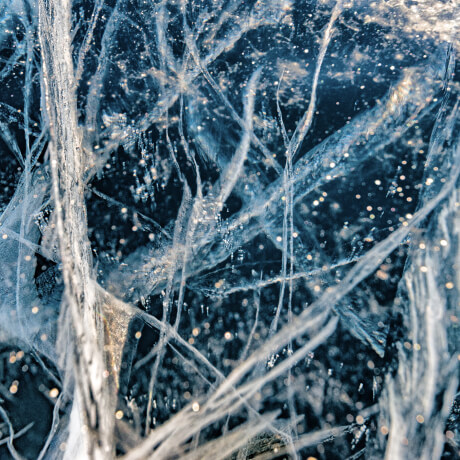
Everyone knows Baikal as the largest lake in the world. Many also know it's the biggest source of fresh water and one of the most beautiful places in Russia.
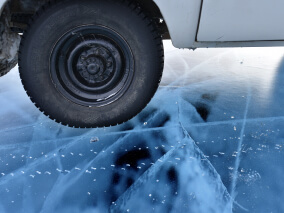
Of course, all of that is true. But Baikal is also an ideal place for skijoring competitions. That's a sport where a skier straps themselves to a motorcycle, and the tandem tries to reach the highest possible speed on the ice. In March 2019 a world record was set at the "Baikal Mile" festival — 197.011 km/h.
Karelia
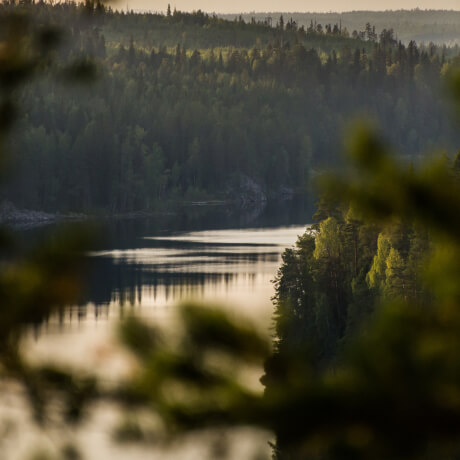
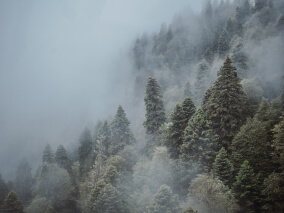
Siberia ends not at the Urals but in Karelia: the Siberian larch that forms the taiga doesn't grow west of Vodlozero. Yet here it shoots up to 30 metres — the forests of Karelia's national parks, hemmed in by impassable bogs, have never known the axe. Some pines are already more than half a millennium old. Touch a living being that saw the sun before Ivan the Terrible did. In the virgin forest you won't meet a trail for a hundred kilometres. And on the rare paths, trees a couple of metres above the ground are marked by bear claws. So that everyone knows who's the master here.
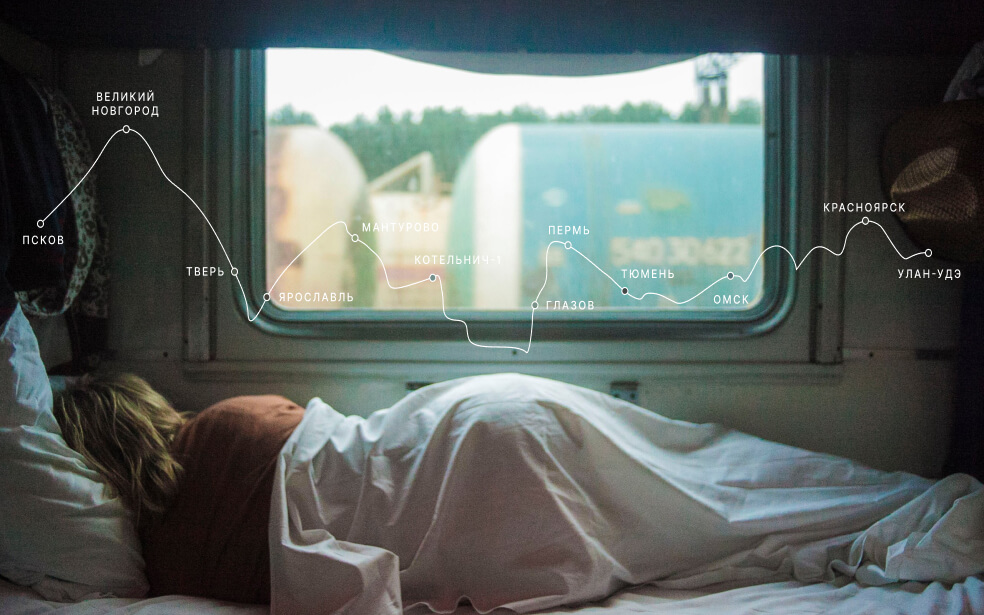
To Baikal on "dog" trains
Inspired by the study topic on the Trans-Siberian — a journey from the capital to Baikal by suburban trains.